

Thailand
Governing authorities
One team takes you from first assessment to first sale in Southeast Asia and beyond: from company incorporation to incentive navigation, from go-to-market execution to your first sale.Offices in Singapore, Thailand and Vietnam, with trusted execution teams in eight more markets.
Choose a market for its usual entry route: the right entity, who approves your product, how goods clear customs and what to watch for. The first three steps happen everywhere; import, distribution and sales follow when you are ready.
Most companies stitch together a law firm, an accountant, a freight forwarder and a sales agency. We run all of it through our own team and network of distributors, partners and facilities.
AEnter the market
Market research, entry-model choice and a clear penetration plan with milestones.
Before you commit capital, we test whether the market fits your product and how to enter it. Then we build the legal entity and keep it compliant.
Company registration, shareholder structure and the business licences you need to trade in Singapore, Thailand, Vietnam and our partner markets.
Office space, hiring and translation so your team can operate from day one.
We identify the incentive schemes open to you in each market, such as Thailand's BOI and comparable programmes in Singapore, Vietnam, Indonesia and our other markets, then apply and track the conditions after approval.
BStructure and stay compliant
Market-by-market tax comparison, incentive eligibility, entity choice, transfer pricing and treaty review before you set up.
We plan your tax position before you commit, keep your books to local standards, prepare you for audit and restructure entities when the business changes.
Monthly bookkeeping, VAT and corporate tax filings, payroll and management reports to local standards.
Audit-ready accounts, with statutory audits coordinated with licensed auditors in each market.
Holding structures, consolidation, shareholder changes and orderly exits.
Businesses change shape as they grow, merge or step back from a market. These are the options we most often work through with clients.
COperate and grow
Start with the official portals below. When your team is ready to move, we help choose the right route and prepare the application.
Product registration and import permits prepared and filed for you.
Customs clearance and documentation for inbound and outbound shipments.
Storage, inventory control and order fulfilment from our partner facilities.
A local sales team that represents your brand to trade and retail buyers.
Introductions to distributors and retail partners suited to your category.
Campaigns, in-store promotion and social media strategy for local audiences.
Businesses change shape as they grow, merge or step back from a market. These are the options we most often work through with clients.
Hold your Asian subsidiaries through one parent, often in Singapore, to simplify ownership, funding and dividends.
Fits: entering a second marketChoose or convert the local presence that matches your activity, liability appetite and licensing needs.
Fits: moving from testing to tradingMerge or amalgamate overlapping companies after growth or acquisitions to cut cost and compliance load.
Fits: after an acquisitionBring in investors, buy out partners or rebalance ownership, with the filings and agreements handled.
Fits: changing ownershipReorganise obligations and operations when a business is under pressure, including formal rehabilitation where it fits.
Fits: cash-flow pressureClose an entity cleanly: final tax clearance, liquidation and deregistration.
Fits: leaving a marketWork out corporate income tax and incentives, VAT or GST on your sales, withholding tax on payments abroad, and the statutory cost of employing staff, in your own currency and side by side.
Example figures. Change them to your own.
| Market | Standard rules | Effective rate | With main incentive |
|---|
Indicative only. Standard figures use headline corporate income tax rules checked in October 2026 and mid-market exchange rates from 11 October 2026. Incentive figures apply the scheme's rate to all profit; real eligibility depends on the activity, investment size, location and approval. Groups with consolidated revenue of EUR 750 million or more may owe top-up tax to reach 15% in most of these markets.
Example figures. Change them to your own.
| Market | Standard rate | Registration threshold | VAT/GST on your sales |
|---|
| Market | Rate | Tax withheld |
|---|
VAT shows what you would charge customers at the standard rate once registered. Withholding rates are domestic rates on payments to a foreign company with no local presence, before any tax treaty relief. Rates checked in October 2026.
Example figures. Change them to your own.
| Market | Employer / month | Employee / month | Annual employer cost |
|---|
Statutory social security and provident fund contributions only, per employee at the salary entered. Annual employer cost covers salary plus employer contributions for all employees. Excludes bonuses, optional insurance, work-injury rates that vary by industry, foreign worker levies and severance or gratuity accruals. China uses Shanghai rates.
| Market | Income tax / month | Effective rate | Take-home / month |
|---|
Estimate for a single, tax-resident employee with no dependants and salary as the only income, on 2026 rates. Applies each market's standard personal allowance and deductible employee contributions; ignores bonuses, benefits in kind and optional reliefs. Take-home is gross salary less employee contributions and income tax. Korea includes 10% local income tax; Hong Kong uses 2026/27 allowances; Vietnam uses the new five-band schedule. Non-residents can be taxed at flat rates instead, such as 20% in Vietnam, Indonesia and Cambodia, 30% in Malaysia and at least 15% in Singapore.
Rates checked against PwC Worldwide Tax Summaries
Get a tax planStart in one market and add the next when you are ready. Our own teams work from Singapore, Bangkok and Ho Chi Minh City, and trusted partners cover eight more markets across Asia and the Middle East.
Regional hub for holding structures, trading and market entry.
7 Temasek Boulevard, #12-07 Suntec Tower One, Singapore 038987
Full-service base for market entry, logistics and distribution.
Quant Building, Soi Sukhumvit 25, Bangkok 10110
A fast-growing consumer market with its own approval regime.
Tầng 8, Số 100 Nguyễn Thị Minh Khai, Phường Xuân Hòa, TP. Hồ Chí Minh
A defined sequence, so you always know what happens next and who owns it.
We learn your product, targets and budget, and confirm which market to open first.
A written entry plan covering structure, tax, incentives, approvals, logistics and sales channels, with costs and timeline.
Entity, licences, approvals and warehousing put in place in parallel to save time.
Sales and distribution go live, and we report on performance as you grow.
Consulting, incorporation, tax, accounting, trade, logistics and sales through one team. No hand-offs between vendors.
Plans built around the specific approvals, channels and buyers your product needs.
Our track record includes Durex (Thailand), Aura Air, All Kurma and Supreme Beverages.
Get what you need done accurately, with an operating team that understands the global operating mindset and makes sure it is carried out locally.
Golden Eye helped us grow into Thailand with excellent live and written translation, social media strategy and operational plans. Professional, on time and easy to communicate with. I recommend them to any foreign business that needs support in Thailand.

 Meet The Team
Start with the official portals below. When your team is ready to move, we help choose the right route and prepare the application.
How we help: choosing the right route, preparing documents and coordinating with your local entity. Rules and fees change often, so always confirm on the official portal before applying.
Ask about visasPractical briefings from our team on entering Asian markets. Every guide is free to download as a PDF.
Southeast Asia
North Asia
Middle East
No market matches. Try a country or city name.
Q2 2026 growth, where AI and electronics investment is going, incentives, and how to set up a regional headquarters.
Q2 2026 trends, growth industries, where to set up and which company structure fits.
Q3 2026 trends, growth industries, government incentives, where to set up and which company structure fits.
Q2 2026 growth, record data-centre investment, the Johor–Singapore SEZ, Labuan and how to set up.
Q2 2026 growth, record investment realisation, downstream industry, PT PMA rules and halal deadlines.
Q2 2026 slowdown, where opportunities remain, CREATE MORE incentives and the liberalised ownership rules.
2026 investment approvals, special economic zones, QIP incentives and what foreign companies can own.
H1 2026 growth, AI-driven trade, low taxes, Greater Bay Area access and how to set up.
H1 2026 growth, where foreign investment is going, the negative list, and entry through Shanghai and Guangxi.
Q2 2026 growth, record FDI arrivals, Free Economic Zones, cash grants and how to set up.
2026 growth, record UAE investment, free zones vs mainland, 9% corporate tax and Golden Visas.
Who qualifies, the tax and non-tax incentives, the global minimum tax change and how to apply.
Read the guidePodcast · Money FMGordon Ho on Money FM's Mind Your Business, on what SMEs should check before choosing a local partner abroad.
ListenWe provide end-to-end market expansion services across Southeast Asia and greater markets: consulting, incorporation, investment incentives, legal compliance, tax planning, accounting and audit, restructuring, regulatory approvals, import and export, warehousing, transport, and sales and marketing.
No. Some clients use us end to end; others take a single service such as incorporation or distribution. We scope the engagement around what you already have in place.
Our offices are in Singapore (headquarters), Thailand and Vietnam. We also serve Malaysia (including Labuan and Johor), Indonesia, the Philippines, Cambodia, Hong Kong, China (Guangxi and Shanghai), South Korea and Dubai.
Yes. Our Thailand team checks whether your activity is eligible, prepares the application, sets up the company and keeps you within the promotion conditions after approval. Start with our BOI guide.
We prepare audit-ready accounts and coordinate statutory audits with licensed auditors in each market, so the audit opinion comes from an independent licensed firm.
Yes. We help founders and staff choose the right visa or work pass in Singapore, Thailand and Vietnam and prepare the application. Our visa guides link to each official portal.
A Singapore private limited company can usually be incorporated within a few working days once documents are ready. A Thai limited company takes about a month, longer if it needs BOI promotion or a Foreign Business Licence. In Vietnam, a foreign-owned company first needs an investment registration certificate, so allow one to two months. We confirm the timeline for your activity at the start.
Yes. There are several ways to structure 100% foreign ownership in Thailand: a representative office or a branch office of your overseas company, a Thai company that obtains a Foreign Business Licence (FBL), or a company promoted under the Board of Investment (BOI), which also brings tax and non-tax incentives. Manufacturing and most export activities are already open to full foreign ownership. Our Thailand market guide compares the options.
Yes. We set up regional holding companies, convert branches and representative offices into subsidiaries, consolidate entities, handle share transfers and close companies, and we model the tax effect across markets before you decide. Our tax planning tool gives a first comparison.
Send us a short enquiry with your product, target market and timeline. We will arrange a discovery call and follow up with a proposed plan.
Home / Team & consultants
Team & consultantsYou work directly with the founders and office leads, not a rotating account team.
 Radio interview · MONEY FM 89.3Mind Your Business: breaking into new markets
On what SMEs should check before choosing a local partner abroad, and how to enter Southeast Asian markets with less risk.
Listen ↗ Profile · International Business Times SingaporePaving the way for brands to expand across the SEA region
How Gordon built Golden Eye Corp from his own experience of entering Thailand, and the brands it has since helped grow in the region.
Read the article ↗何国祯กอร์ดอน โฮ
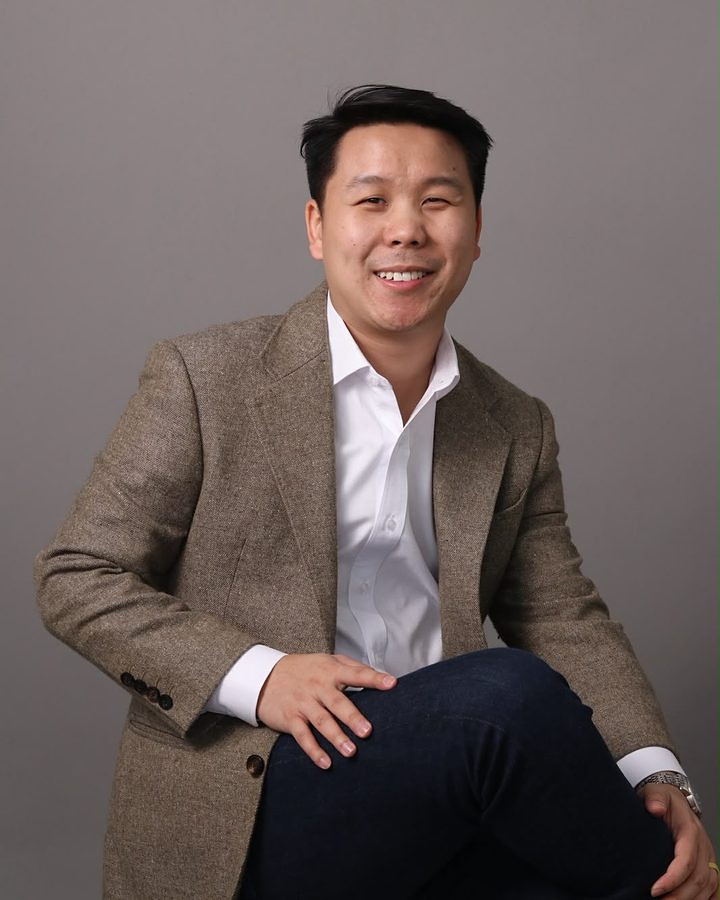
Gordon is a Singaporean entrepreneur. He moved his business to Bangkok after seeing steady growth in Thailand's consumer market, and learned first-hand how hard local rules, licensing and hiring can be for a foreign company. He founded Golden Eye Corp in 2021 to turn that experience into a service: one local partner that handles the company set-up, the supply chain and the sales channels together. He has led expansions for brands including Durex (Thailand), Aura Air and Supreme Beverages, has spoken on Money FM 89.3 and was profiled by IBTimes Singapore on helping SMEs enter new markets. Gordon holds an M.Sc. in Branding and Marketing from Chulalongkorn University, a B.A. in Global Business from Coventry University and a Diploma in Business Administration (Entrepreneurship) from Singapore Polytechnic, where he mentors students as an alumnus. He has also completed the Global Marketing Program at Cambridge Judge Business School.

กุลธิดา เครือโสภณ
Koonthida leads Golden Eye Corp's Thailand office. She is a Thai-licensed attorney and certified Notarial Services Attorney, and spent five years in M&A practice at a Bangkok law firm and two years as in-house counsel. Her work covers corporate and commercial law, contracts, labour law and insolvency, and she advises SMEs, industrial businesses and foreign-owned companies on entering and operating in Thailand. Koonthida studied law at Chulalongkorn University, where she also completed her LL.M. in Financial and Capital Markets.
SectorValue / structureWork handled
JVA: joint venture agreement · SPA: share purchase agreement · SHA: shareholders' agreement · SSA: share subscription agreement · AOA: articles of association · MOU: memorandum of understanding · LOI: letter of intent
Behind the leadership team, consultants in Singapore, Bangkok and Ho Chi Minh City handle the day-to-day work, supported by licensed partners where the law requires them.
Incorporation, licensing, contracts and compliance.
Tax planning, bookkeeping, filings and audit support.
Approvals, customs, warehousing and delivery.
Distributor networks, outsourced sales and campaigns.
Home / Market guides / Thailand BOI
Market guide · ThailandThe Thailand Board of Investment (BOI) is the government agency under the Office of the Prime Minister that grants tax and non-tax incentives to approved projects. This guide covers who qualifies, what you can receive and how the application works.
Thai or foreign-owned companies investing in an activity on the BOI's eligible list, which covers manufacturing, digital, R&D, medical, logistics and selected services. Most activities need a minimum investment of THB 1 million, excluding land and working capital. Some set their own thresholds; software projects, for example, are measured by annual salaries for Thai IT staff of at least THB 1.5 million.
Every eligible activity sits in a group that sets its base corporate income tax (CIT) exemption.
| Group | CIT exemption | Cap on exempt income |
|---|---|---|
| A1+ | 10–13 years | No cap |
| A1 | 8 years | No cap |
| A2 | 8 years | 100% of investment* |
| A3 | 5 years | 100% of investment* |
| A4 | 3 years | 100% of investment* |
| B | No exemption | Duty and non-tax incentives |
* Excluding land and working capital. Total CIT exemption, including merits, is capped at 13 years.
Since 1 January 2025, Thailand has applied a 15% top-up tax to multinational groups with consolidated revenue of at least EUR 750 million. Projects in these groups can switch their CIT exemption to a reduced 10% rate for up to twice the exemption period plus any reduction period, capped at 10 years. Other BOI benefits are unchanged.
Confirm the activity code, group and conditions that apply to your project. We do this with you before anything is filed.
Submit the application and supporting documents through the BOI's e-Investment Promotion system.
The BOI may ask you to present the project. Review usually takes around 40, 60 or 90 working days depending on investment size, with the largest projects decided by the Board.
Accept the approval, set up the Thai company if it does not exist yet and obtain the promotion certificate.
Import machinery, bring in foreign experts, start operations, report progress through e-Monitoring and claim the CIT exemption once revenue begins.
Our Thailand team, led by a Thai-licensed attorney, checks eligibility, prepares and files the application, sets up the company and manages compliance after approval, so the incentives you were granted are the ones you keep.
Discuss a BOI applicationHome / Market guides / Expanding into Thailand
Market guide · ThailandWhere Thailand's economy stands after Q2 2026, the industries and regions drawing new investment, and how to choose the right company structure for your entry.
Thailand's economy grew 1.9% year on year in Q2 2026, down from 2.8% in Q1 and the slowest of the six largest ASEAN economies. The headline hides a split: investment and exports are running hot, while household spending and tourism are soft.
These sectors combine strong BOI demand in H1 2026 with room for new suppliers, service providers and distributors.
USD 33 billion of H1 BOI applications, the largest single category. Openings in power and cooling systems, fit-out, network equipment, cloud and managed services.
USD 3.56 billion across 179 projects in H1, led by optical transceivers, PCBs and hard drives. PCB applications since 2023 total USD 9.85 billion over 224 projects, creating demand for materials, chemicals, testing and logistics.
USD 1.82 billion in H1. Thailand remains a regional food export base; suppliers of ingredients, packaging, cold chain and food-safety services are in demand.
USD 1.17 billion in H1, including 198 clean-energy projects worth USD 780 million. Solar, storage and power for data centres and factories lead the way.
USD 1.19 billion in H1. Warehousing, regional distribution, treasury and headquarters services benefit as manufacturers move in.
USD 759 million in H1. The industry is shifting from combustion parts to EV, battery and electronics components, opening gaps for new tier-2 and tier-3 suppliers.
Medical projects helped lift BOI applications in the North by 93% in H1. Medical devices, clinics, elderly care and wellness services serve both an ageing population and visitors.
Still a large market, but slower in 2026 and mostly on the Foreign Business Act's restricted list. Most foreign entrants use a Thai partner, a licence or the capital exemptions in section 5.
H1 2026 BOI applications by region show where new capacity is going.
| Area | H1 2026 BOI applications | Best suited to |
|---|---|---|
| Bangkok and Central | USD 26.7bn | Regional headquarters, data centres, professional and financial services, retail, consumer brands |
| Eastern Economic Corridor (Chonburi, Rayong, Chachoengsao) | USD 14.7bn | Electronics and PCBs, EV and auto parts, petrochemicals, data centres; near Laem Chabang port and U-Tapao airport; extra EEC incentives |
| North (Chiang Mai, Lamphun and others) | Up 93% | Energy, food processing, medical and wellness; decentralisation incentives in qualifying provinces |
| Border special economic zones | Varies | Cross-border trade and labour-intensive assembly near Malaysia, Laos, Cambodia and Myanmar |
See our BOI guide for the extra incentives available in the EEC, industrial estates and the 20 decentralisation provinces. Read the BOI guide
The right structure depends on what you will do in Thailand, how much control you need and whether you will earn revenue locally.
| Structure | Ownership and key rules | Setup time |
|---|---|---|
| Thai limited company | At least 51% Thai-held. Can trade in any activity. THB 2 million paid-up capital and four Thai employees for each foreign work permit. CIT at 20%, filed twice a year. | About 1 month |
| BOI-promoted company | Up to 100% foreign-owned for the promoted activity. Tax holidays, duty exemptions, land ownership, visas and work permits. Activity must be on the BOI's eligible list. | About 3 months |
| BOI Trade and Investment Support Office (TISO) | Majority or 100% foreign-owned. For services to affiliates, consulting, sourcing, engineering and technical services, and wholesale of Thai-made goods. No tax holiday, but visas, work permits and land rights. At least THB 10 million a year in operating expenses. | About 3 months |
| BOI International Business Centre (IBC) | Regional hub serving affiliates, including treasury. THB 10 million paid-up capital and at least 10 skilled staff. Reduced CIT of 8%, 5% or 3% depending on annual Thai spending, plus dividend and personal tax benefits. | About 3 months |
| Foreign Business Licence (FBL) | Lets a foreign-majority company carry out a restricted List 3 activity. Granted case by case; same capital and staffing rules for work permits. | 3–6 months |
| Representative office | Wholly owned by head office. Cannot earn income, so no CIT, but limited to non-trading work such as sourcing, quality control and market research. Capital is brought in from head office in stages over three years; audited accounts are filed every year. | Weeks to 3 months, depending on activity |
Other ownership arrangements may suit some investors. We review them case by case so the structure stays compliant.
Under the Foreign Business Act, a company that is 50% or more foreign-owned needs a licence or a BOI promotion before carrying out activities on List 3. These include:
A foreign-majority company can run retail without a licence if it has paid-up capital of at least THB 100 million, plus THB 20 million for each store after the first. Wholesale is exempt with at least THB 100 million per store. Some construction and brokerage activities have similar thresholds.
Size demand, check competitors and pricing, and confirm whether your activity is restricted or eligible for BOI.
Decide between a Thai company, BOI promotion, a licence or a representative office, and plan shareholding, capital and staffing.
Register with the Department of Business Development, get a tax ID, open a bank account and register for VAT and social security.
Apply for BOI promotion or a Foreign Business Licence where needed, plus product approvals such as Thai FDA registration.
Hire staff, obtain visas and work permits, set up import and distribution, and begin monthly tax and payroll filing.
Our Thailand team, led by a Thai-licensed attorney, takes you from market assessment to a trading company: structure, registration, BOI or licence applications, visas, accounting and sales channels, with one team throughout.
Plan your Thailand entryFigures in this guide come from the following published sources.
Home / Market guides / Expanding into Vietnam
Market guide · VietnamWhere Vietnam's economy stands after Q3 2026, the industries and provinces drawing new investment, the government incentives on offer and how to choose the right company structure.
Vietnam is the fastest-growing large economy in Southeast Asia this year. GDP grew 9.95% year on year in Q3 2026 and 9.01% in the first nine months, led by manufacturing, exports and a surge in foreign investment. The government is aiming for double-digit growth for the full year.
These sectors combine strong investment in 2026 with room for new suppliers, service providers and distributors.
Vietnam's largest and fastest-growing export industry. Samsung plans a chip testing plant near Hanoi and is expanding substrate production in Thai Nguyen, and FPT has opened a Vietnamese-owned chip testing and packaging plant in Bac Ninh. Openings in components, materials, testing, equipment and engineering services.
Data centres can be 100% foreign-owned since July 2024. G42 has signed a USD 1 billion framework with FPT and Viet Thai Group, and Ho Chi Minh City's data-centre pipeline is more than double its current 33 MW. Power, cooling, fit-out and managed services are in demand.
Transport and storage took 17.6% of newly registered FDI in the first nine months. Deep-sea ports at Cai Mep–Thi Vai and Hai Phong, new expressways and free-trade zones are driving demand for warehousing, cold chain and regional distribution.
Retail sales grew 13.4% in a market of over 100 million people. Modern retail, e-commerce, food and beverage, health and beauty, and franchise brands are expanding, though retail outlets need licences (see Restricted activities).
Real estate drew USD 6.94 billion of new and additional FDI in nine months. Ready-built factories, warehouses and industrial land in the North and around Ho Chi Minh City remain in demand.
Electricity, gas and utilities took USD 723 million of disbursed FDI in nine months. Direct power purchase agreements and the revised national power plan are opening rooftop solar, storage and power supply to factories and data centres.
The International Financial Centre in Ho Chi Minh City and Da Nang offers 10% corporate tax for priority sectors and personal tax exemptions for qualifying experts until 2030, aimed at banks, funds, fintech and other financial services.
17.7 million foreign visitors arrived in the first nine months, 71% of the year's target. Hotels, food service, private healthcare and education serve both visitors and a growing middle class.
Newly registered FDI in the first nine months of 2026, by province, shows where new capacity is going.
| Area | New FDI, Jan–Sep 2026 | Best suited to |
|---|---|---|
| Ho Chi Minh City (now including Binh Duong and Ba Ria–Vung Tau) | USD 18.2bn | Regional headquarters, consumer brands, retail, finance and the IFC, data centres; Cai Mep–Thi Vai deep-sea port and established industrial parks |
| Northern electronics belt (Thai Nguyen, Bac Ninh, Hai Phong) | USD 15.2bn combined | Electronics, semiconductors and their suppliers; Hai Phong port and free-trade zone; close to China supply chains |
| Hanoi | USD 4.1bn | Government relations, R&D, software, and financial and professional services |
| Central Vietnam (Da Nang, Nghe An) | Nghe An USD 2.4bn | Da Nang's IFC pilot and free-trade zone, software and tourism; electronics assembly in Nghe An |
Many provinces merged in July 2025, so older documents and addresses may still use former province names.
Vietnam is moving from tax holidays alone to a mix of tax incentives, cash support and faster procedures.
Groups with annual revenue of EUR 750 million or more pay at least 15% in Vietnam through a top-up tax, so for them cash support and faster procedures matter more than tax holidays. We model both before you choose a location.
The right structure depends on your activity, how much control you need and whether you will earn revenue locally.
| Structure | Ownership and key rules | Setup time |
|---|---|---|
| Limited liability company (LLC) | Up to 100% foreign-owned in most sectors, subject to market-access conditions. One or more members and no general minimum capital, but capital must match the business plan and be contributed within 90 days. The most common route for foreign investors. | About 1–2 months |
| Joint-stock company (JSC) | At least three shareholders. Can issue shares and list, so it suits larger projects and future fundraising. Same licensing steps as an LLC. | About 1–2 months |
| Joint venture with a Vietnamese partner | Needed in sectors with foreign-ownership caps, such as advertising and some logistics and telecoms services. Partner choice and the charter matter as much as the licence. | 2–3 months |
| Representative office | Cannot earn revenue or sign sales contracts; for market research, liaison and promotion. Licensed by the provincial Department of Industry and Trade for five years at a time. | About 2–4 weeks |
| Branch | Only where Vietnam's WTO and trade-agreement commitments allow, mainly some services and banking. Operates under the parent company's liability. | 2–3 months |
| Business cooperation contract (BCC) | A contract with a Vietnamese company to share revenue or profit without forming a new entity. The foreign party needs an investment registration certificate. | 1–2 months |
Times are for standard cases; conditional business lines add sector licences. Since March 2026 the company can be registered before the investment project, but the project licence is still needed to open the capital account and carry out the project.
Vietnam sets out sectors that are closed or conditional for foreign investors in its market-access negative list. The main ones for new entrants are:
Outlets under 500 m² inside a shopping centre, and convenience stores and minimarts under 500 m² outside one, are generally exempt from the economic needs test. The rules depend on location and goods, so we confirm them before you sign a lease.
Size demand, check competitors and pricing, and confirm whether your activity is open to foreign investors or conditional.
Decide between an LLC, joint venture, representative office or partnership, and compare provinces, zones and incentives.
Obtain the investment and enterprise registration certificates, open the direct investment capital account and contribute capital within 90 days.
Apply for trading licences, product registrations or notifications, and incentive or Investment Support Fund claims where relevant.
Hire staff, obtain work permits and temporary residence cards, set up import and distribution, and begin tax and social insurance filings.
Our Ho Chi Minh City team takes you from market assessment to a trading company: structure, investment and enterprise registration, licences and incentives, work permits, accounting and sales channels, with one team throughout.
Plan your Vietnam entryFigures in this guide come from the following published sources.
Home / Market guides / Expanding into Singapore
Market guide · SingaporeWhere Singapore's economy stands after Q2 2026, the industries drawing new commitments, the incentives on offer and how to set up a company or regional headquarters.
Singapore's economy grew 5.9% year on year in Q2 2026 and 6.1% in the first half, lifted by global spending on AI hardware. The government raised its 2026 growth forecast to 4.5–5.5% in August.
These sectors combine strong investment with room for new suppliers, service providers and regional teams.
Electronics made up a third of 2025 manufacturing commitments. Wafer fabs, advanced packaging and equipment makers need materials, maintenance, cleanroom and engineering services.
Biomedical manufacturing was 30.8% of 2025 manufacturing commitments. Openings in contract manufacturing, medical devices, clinical services and an ageing-population care market.
Global AI investment is driving demand for data centres, cloud, cybersecurity and AI services, though new data-centre capacity is rationed for energy efficiency.
Most of the SGD 8.9 billion of 2025 business expenditure went to headquarters, professional services and R&D. Holding, treasury and family-office structures remain in demand.
Port and airport hubs, commodity trading desks and regional distribution centres serve the whole of Southeast Asia.
A high-income test market for premium consumer, food and beauty brands before wider ASEAN roll-out; products need SFA or HSA approval where relevant.
Singapore is one market, so the choice is about the right estate or district for your activity.
| Area | Typical use |
|---|---|
| Central business district and Marina Bay | Regional headquarters, finance, treasury, professional services and family offices |
| one-north and Punggol Digital District | Technology, biomedical research, AI and start-ups, close to universities and research institutes |
| Jurong, Tuas and Seletar (JTC estates) | Semiconductors, chemicals, advanced manufacturing, aerospace and logistics |
| Woodlands and the north | Gateway to the Johor–Singapore Special Economic Zone for cross-border manufacturing and logistics |
JTC manages industrial land; we help you shortlist estates and coordinate with landlords.
Singapore relies less on tax holidays and more on targeted grants and reduced-rate awards, adjusted for the global minimum tax.
The right structure depends on your activity, how much control you need and whether you will earn revenue locally.
| Structure | Ownership and key rules | Setup time |
|---|---|---|
| Private limited company (Pte. Ltd.) | Up to 100% foreign-owned. At least one locally resident director and a company secretary. Registered online with ACRA; the usual choice for trading companies and regional HQs. | 1–3 days to register; bank account longer |
| Branch of a foreign company | Same legal entity as the parent, which carries its liabilities. Needs two local authorised representatives; taxed at the corporate rate. | About 1–2 weeks |
| Representative office | For market research and liaison only; cannot trade or earn revenue. Renewed yearly, for up to three years. | About 1–2 weeks |
| Variable capital company (VCC) | Investment fund vehicle managed by a licensed fund manager, used for regional funds and family offices. | About 1–2 months |
Bank account opening and work passes usually take longer than incorporation itself.
Singapore is open to foreign ownership in most sectors, but regulated activities need licences first:
Employment Pass applications are scored under the COMPASS framework on salary, qualifications, diversity and local hiring. Plan local hires alongside foreign transfers.
Decide whether Singapore will trade, hold, finance or manage the region, as that shapes structure and incentives.
Register the company with ACRA, appoint a resident director and company secretary, and adopt the constitution.
Open the corporate bank account, register for GST if needed, and apply for Employment Passes.
Apply for sector licences and, where relevant, EDB or Enterprise Singapore support.
Hire, set up payroll and CPF, appoint auditors and file annual returns and tax.
Our Singapore headquarters takes you from structuring to a working company: incorporation, nominee and resident-director options, bank account, work passes, tax and accounting, and regional holding structures.
Figures in this guide come from the following published sources.
Home / Market guides / Expanding into Malaysia
Market guide · MalaysiaWhere Malaysia's economy stands after Q2 2026, why data centres and electronics dominate new investment, the incentives in Johor and Labuan, and how to choose a structure.
Malaysia's economy grew 6.0% year on year in Q2 2026 and 5.6% in the first half, led by electronics manufacturing and a rebound in mining. Bank Negara Malaysia's official forecast for 2026 is 4–5%.
These sectors combine strong 2026 approvals with room for new suppliers, service providers and distributors.
RM95.8 billion of approvals in H1 2026, mainly in Johor and Selangor. Demand for power and cooling equipment, construction, fit-out and managed services.
Penang and Kulim are global hubs for chip assembly, testing and equipment. Openings in components, automation, testing and engineering services.
Primary-sector approvals jumped to RM17.6 billion, led by offshore oil and gas, alongside solar and green-hydrogen projects.
Malaysia's JAKIM halal certification is recognised widely, making it a base for halal food, cosmetics and pharmaceuticals.
Port Klang, Tanjung Pelepas and new rail links support regional distribution and e-commerce fulfilment.
A growing medical-device cluster and medical tourism market serve the region.
First-half 2026 approvals by state show where capacity is going.
| Area | H1 2026 approvals | Best suited to |
|---|---|---|
| Selangor and Kuala Lumpur | RM96.6bn | Regional offices, data centres, consumer brands, services and logistics around Port Klang |
| Johor and the Johor–Singapore SEZ | RM59.4bn | Data centres, manufacturing and logistics next to Singapore, with SEZ tax incentives |
| Penang and Kedah (Kulim) | RM20.2bn (Penang) | Semiconductors, electronics and medical devices |
| Labuan | — | Offshore holding, leasing, insurance and trading companies under the Labuan regime |
Malaysia combines classic tax incentives with new zone-based regimes.
The right structure depends on your activity, how much control you need and whether you will earn revenue locally.
| Structure | Ownership and key rules | Setup time |
|---|---|---|
| Private limited company (Sdn. Bhd.) | Up to 100% foreign-owned in manufacturing and many services. Distribution and retail need a wholesale, retail and trade licence and usually higher capital. | About 2–4 weeks |
| Labuan company | For holding, trading, leasing and financial activities from Labuan; needs a Labuan trust company and local substance. | About 2–4 weeks |
| Branch of a foreign company | Registered with SSM; the parent carries liabilities. Common for project and construction work. | About 1 month |
| Representative or regional office | Approved by MIDA for liaison and coordination; cannot trade. | About 1–2 months |
Expatriate posts and Employment Passes are applied for through the Expatriate Services Division once the company is set up.
Most sectors are open, but some activities carry conditions for foreign-owned companies:
Halal certification from JAKIM opens Muslim-majority markets across the region. We help prepare the documents and plant audit.
Size demand, check competitors and pricing, and confirm whether your activity needs a licence or special conditions.
Compare a Sdn. Bhd., Labuan company or branch, and compare Selangor, Johor, Penang and SEZ incentives.
Incorporate with SSM, open a bank account and register for tax, SST and EPF.
Apply for MIDA incentives, trading licences, product approvals and halal certification where needed.
Hire staff, obtain Employment Passes, set up import and distribution, and begin monthly filings.
We coordinate your Malaysia entry from Singapore with trusted execution teams in Kuala Lumpur, Johor and Labuan: structure, registration, incentives, licences, work passes, accounting and sales channels.
Figures in this guide come from the following published sources.
Home / Market guides / Expanding into Indonesia
Market guide · IndonesiaWhere Indonesia's economy stands after Q2 2026, where investment is flowing, the incentives available and how to set up a foreign-owned company (PT PMA).
Indonesia's economy grew 5.29% year on year in Q2 2026. Investment realisation reached IDR 1,010.6 trillion in the first half, up 7.2% and almost half the full-year target of IDR 2,041.3 trillion.
These sectors combine strong 2026 investment with room for new suppliers, service providers and distributors.
The largest investment sector in H1 2026. Demand for equipment, engineering, logistics, environmental and power services around smelters and battery plants.
Jakarta and Batam are building data-centre capacity for cloud providers, with demand for power, cooling and network services.
Food, beverages, personal care and household goods for a large domestic market; halal certification is increasingly required.
Transport, warehousing and telecoms drew IDR 102.7 trillion in H1, supporting e-commerce and inter-island distribution.
IDR 85.8 trillion in H1 for housing, industrial estates and offices; ready-built factories near Jakarta and Surabaya are in demand.
Hospitals, clinics, medical devices and pharmaceuticals, subject to BPOM registration and local-content rules.
First-half 2026 investment realisation by province shows where capacity is going.
| Area | H1 2026 investment | Best suited to |
|---|---|---|
| Jakarta | IDR 173.6tn | Headquarters, services, finance, digital and consumer brands |
| West Java and Banten | IDR 204.4tn combined | Manufacturing, automotive, electronics and logistics near Jakarta |
| East Java (Surabaya) | IDR 72.7tn | Manufacturing, food processing and the eastern Indonesia gateway |
| Central Sulawesi and other nickel regions | IDR 68.7tn | Nickel processing and battery materials in industrial parks |
| Batam and special economic zones | Varies | Export manufacturing, data centres and logistics near Singapore, with zone incentives |
Indonesia uses tax holidays, allowances and special zones to steer investment into priority sectors.
The right structure depends on your activity, how much control you need and whether you will earn revenue locally.
| Structure | Ownership and key rules | Setup time |
|---|---|---|
| Foreign-owned limited company (PT PMA) | Ownership depends on the business line (KBLI) under the Positive Investment List. Minimum IDR 2.5 billion paid-up capital per KBLI and an IDR 10 billion investment plan. | About 1–2 months |
| Representative office (KPPA) | For promotion and liaison only; cannot sign sales contracts or earn revenue. | About 2–4 weeks |
| Trade representative office (KP3A) | For foreign trading companies to promote and find buyers; no direct sales. | About 2–4 weeks |
| Local partner or distributor | Distribution through an Indonesian company, common where foreign ownership is limited or for a market test. | Varies |
Business licences are issued through the risk-based OSS system; higher-risk activities need extra approvals.
Indonesia's Positive Investment List sets which activities are open, capped or reserved:
Mandatory halal certification is being phased in by product category, and requirements for imported products are due to be set by October 2026. Build certification into your launch plan.
Size demand, check competitors and pricing, and confirm your KBLI codes and any ownership caps.
Choose between a PT PMA, representative office or distributor, and compare Java, Batam and special economic zones.
Set up the PT PMA, obtain a business identification number (NIB) through OSS, open a bank account and pay in capital.
Obtain sector licences, BPOM registrations, SNI and halal certificates, import licences and incentive approvals.
Hire staff, obtain work permits (RPTKA) and KITAS, set up distribution and begin tax and BPJS filings.
We coordinate your Indonesia entry from Singapore with trusted execution teams in Jakarta: structure, OSS licensing, BPOM and halal approvals, work permits, accounting and distribution partners.
Figures in this guide come from the following published sources.
Home / Market guides / Expanding into Philippines
Market guide · PhilippinesWhere the Philippine economy stands after a weak Q2 2026, the sectors that remain attractive, the CREATE MORE incentives and how to choose a structure.
The Philippine economy grew only 2.3% year on year in Q2 2026, the weakest since 2009 outside the pandemic, and 2.6% in the first half. The government cut its 2026 target to 3.5–4.5% and expects public construction to recover.
These sectors remain attractive despite the 2026 slowdown.
The country's largest services export, now moving into analytics, AI-enabled services and healthcare back-office work.
Fully open to foreign investors since 2022, with demand for solar, wind, storage and grid services.
Chip assembly and testing in economic zones is the leading goods export.
Public-private partnerships in transport, water and power, though delays followed the 2026 scandal.
Food, personal care and franchise brands serve a young market; retail has foreign-capital thresholds.
Resorts, hospitals and clinics serve visitors and a growing middle class.
Most foreign investors start in Metro Manila or an economic zone.
| Area | Typical use |
|---|---|
| Metro Manila (Makati, BGC, Ortigas) | Headquarters, IT-BPM, finance, consumer brands and professional services |
| CALABARZON and Central Luzon (Clark, Subic) | Manufacturing, electronics, logistics and freeport zones near Manila |
| Cebu | IT-BPM, tourism, furniture and electronics in the Visayas |
| PEZA economic zones nationwide | Export manufacturing and IT services with zone incentives |
Incentives come through the CREATE MORE Act and are granted by investment promotion agencies such as the BOI and PEZA.
The right structure depends on your activity, how much control you need and whether you will earn revenue locally.
| Structure | Ownership and key rules | Setup time |
|---|---|---|
| Domestic corporation | Up to 100% foreign-owned outside the Negative List, subject to minimum capital for domestic-market businesses. Registered with the SEC. | About 1–2 months |
| Branch office | Licensed by the SEC; needs an inward remittance of at least USD 200,000 for domestic-market activity. | About 1–2 months |
| Representative office | For liaison and promotion only; needs an inward remittance of at least USD 30,000 a year for expenses. | About 1 month |
| Regional headquarters (RHQ/ROHQ) | Coordination or services to affiliates across the region, with work-visa benefits. | About 2 months |
The Foreign Investment Negative List limits some activities:
Foreign-owned companies cannot own land but can lease it long term under the Investors’ Lease Act. Factories in economic zones are usually leased.
Size demand, check competitors and confirm whether your activity is on the Negative List.
Choose between a corporation, branch or representative office, and between Metro Manila and an economic zone.
Register with the SEC, obtain local business permits, a BIR tax registration and a bank account.
Register with the BOI, PEZA or another promotion agency for incentives, and obtain FDA or other sector licences.
Hire staff, obtain Alien Employment Permits and visas, and begin monthly tax and social filings.
We coordinate your Philippines entry from Singapore with trusted execution teams in Manila: structure, SEC registration, BOI or PEZA incentives, permits, accounting and sales channels.
Figures in this guide come from the following published sources.
Home / Market guides / Expanding into Cambodia
Market guide · CambodiaWhere Cambodia's economy stands in 2026, the sectors drawing approved investment, Qualified Investment Project incentives and how to set up.
Cambodia approved USD 5.45 billion of fixed-asset investment across 346 projects in the first eight months of 2026, expected to create about 200,000 jobs. The World Bank expects growth to slow to 4.3% in 2026 before recovering in 2027.
These sectors combine approved investment with room for new suppliers and service providers.
The largest exporter and employer, now moving to higher-value products and greener production.
Assembly of wiring harnesses, components and bicycles in special economic zones.
Rice, cashew, cassava and fruit processing for export, with demand for equipment and cold chain.
Solar and hydropower projects, with over USD 1 billion of approvals.
Hotels and services around Siem Reap, Phnom Penh and the coast.
Ports, expressways and the new Phnom Penh airport drive demand for logistics and construction services.
Most foreign manufacturers locate in special economic zones.
| Area | Typical use |
|---|---|
| Phnom Penh | Headquarters, services, consumer brands and Phnom Penh SEZ manufacturing |
| Sihanoukville | Deep-sea port, Sihanoukville SEZ, export manufacturing and logistics |
| Border zones (Bavet, Poipet) | Manufacturing linked to Vietnamese and Thai supply chains |
| Siem Reap | Tourism and hospitality |
Incentives come through the Law on Investment 2021 for Qualified Investment Projects (QIPs) registered with the Council for the Development of Cambodia.
The right structure depends on your activity, how much control you need and whether you will earn revenue locally.
| Structure | Ownership and key rules | Setup time |
|---|---|---|
| Private limited company | Up to 100% foreign-owned in most sectors. Registered with the Ministry of Commerce and the General Department of Taxation. | About 1–2 months |
| Qualified Investment Project (QIP) | A company registered with the CDC to receive investment incentives. | About 1–2 months extra |
| Branch office | Same legal entity as the parent; registered with the Ministry of Commerce. | About 1 month |
| Representative office | For liaison and promotion only; cannot trade. | About 2–4 weeks |
Most activities are open to foreign investors, with some limits:
Long-term leases of up to 50 years, renewable, are the usual way for foreign companies to secure land.
Size demand, confirm your activity and whether a QIP makes sense.
Choose between a company, branch or representative office, and between Phnom Penh and an SEZ.
Register with the Ministry of Commerce and tax department, and open a bank account.
Apply to the CDC for QIP status and obtain sector licences.
Hire staff, obtain work permits, register with NSSF and begin monthly tax filings.
We coordinate your Cambodia entry from Singapore with trusted execution teams in Phnom Penh: structure, registration, QIP incentives, licences, work permits and accounting.
Figures in this guide come from the following published sources.
Home / Market guides / Expanding into Hong Kong
Market guide · Hong KongWhere Hong Kong's economy stands after H1 2026, why trade and finance are rebounding, the tax and talent schemes on offer and how to set up a company.
Hong Kong's economy grew 5.1% year on year in the first half of 2026, its strongest half-year in nearly five years. Q2 growth was 4.3%, and the government raised its 2026 forecast to 3.5–4.5%.
These sectors combine strong demand with room for new providers.
Re-export, sourcing and logistics benefit from AI-driven electronics trade.
Funds, private banking and family offices, with tax concessions for qualifying family-owned investment holding vehicles.
Science Park, Cyberport and the Northern Metropolis support AI, fintech and life sciences.
Legal, accounting and consulting for companies operating across the Greater Bay Area.
A high-income market and showcase for brands targeting mainland visitors.
Clinical research, medical devices and healthcare services.
Most foreign companies choose an office location based on clients and talent.
| Area | Typical use |
|---|---|
| Central, Admiralty and Wan Chai | Finance, family offices, legal and professional services |
| Kowloon East and Tsim Sha Tsui | Trading, sourcing, regional offices and retail |
| Science Park and Cyberport | Technology, AI, fintech and life sciences |
| Northern Metropolis | Innovation and technology linked to Shenzhen |
Hong Kong relies on low, simple taxes rather than tax holidays.
The right structure depends on your activity, how much control you need and whether you will earn revenue locally.
| Structure | Ownership and key rules | Setup time |
|---|---|---|
| Private company limited by shares | Up to 100% foreign-owned, with at least one director and a local company secretary. Registered online with the Companies Registry. | About 1–5 days |
| Branch (registered non-Hong Kong company) | Registered within one month of setting up a place of business. | About 1–2 weeks |
| Representative office | For liaison only; needs business registration. | About 1–2 weeks |
| Limited partnership fund | For private equity and venture funds managed from Hong Kong. | About 1–2 months |
Bank accounts can take longer than incorporation; we prepare the documents banks ask for.
Most activities are open, but regulated activities need licences:
Foreign staff need an employment visa from the Immigration Department; talent schemes can speed up senior hires.
Decide on structure, shareholders and directors, and the Hong Kong entity's role in your group.
Register the company and business registration online.
Open a corporate bank account and apply for employment visas.
Obtain any sector licences.
Set up payroll and MPF, appoint auditors and file profits tax returns.
We coordinate your Hong Kong entry from Singapore with trusted execution teams in Hong Kong: structure, incorporation, bank account, visas, licences, tax and accounting.
Figures in this guide come from the following published sources.
Home / Market guides / Expanding into China
Market guide · ChinaWhere China's economy stands after H1 2026, where foreign investment is rising, the incentives in Shanghai and Guangxi, and how to set up a foreign-invested enterprise.
China's economy grew 4.3% year on year in Q2 2026 and 4.7% in the first half, as fixed-asset investment fell. Foreign investment is shifting towards high-tech sectors even as the total declines.
These sectors combine policy support with room for foreign companies.
Manufacturing is fully open to foreign investment, with demand for automation, materials and components.
EVs, batteries, solar and storage, with strong supply chains and intense competition.
An ageing population drives demand for medical devices, clinics and elderly care, with pilot openings in some cities.
Premium food, beauty and health products can test demand through cross-border e-commerce before full registration.
R&D and design services saw the fastest FDI growth in 2026.
Guangxi links China with ASEAN through ports, rail and the Pinglu Canal project.
We focus on two entry points.
| Area | Typical use |
|---|---|
| Shanghai (including the Lingang area) | Regional headquarters, finance, consumer brands, R&D and advanced manufacturing; 15% corporate tax for key industries in Lingang |
| Guangxi (Nanning, Qinzhou, Beibu Gulf) | China–ASEAN trade, processing, logistics and Western Region incentives |
| Greater Bay Area (Shenzhen, Guangzhou) | Electronics, technology and export manufacturing |
| Free trade zones | Pilot openings in services, finance and trade |
China steers investment through regional tax rates and encouraged-industry lists.
The right structure depends on your activity, how much control you need and whether you will earn revenue locally.
| Structure | Ownership and key rules | Setup time |
|---|---|---|
| Wholly foreign-owned enterprise (WFOE) | A limited liability company 100% foreign-owned, outside the negative list. Registered capital must be paid within five years under the 2024 Company Law. | About 2–3 months |
| Joint venture | Required in sectors with ownership limits on the negative list. | About 3–4 months |
| Representative office | For liaison and market research only; cannot trade, and is taxed on deemed profits. | About 1–2 months |
| Cross-border e-commerce | Sell directly to consumers through bonded platforms without a local entity. | Weeks |
The Special Administrative Measures (the negative list) set out restricted and prohibited sectors:
Overseas food manufacturers must register with GACC under Decree 280 from June 2026. We check the status of your suppliers.
Check demand, competitors and whether your activity is restricted.
Choose between a WFOE, joint venture, representative office or cross-border e-commerce.
Register with SAMR, obtain the business licence, open bank and capital accounts, and register for tax.
Obtain sector licences, product registrations and customs registration.
Hire staff, obtain work permits and begin tax and social insurance filings.
We coordinate your China entry from Singapore with trusted execution teams in Shanghai and Guangxi: structure, registration, licences, import registration, accounting and distribution partners.
Figures in this guide come from the following published sources.
Home / Market guides / Expanding into South Korea
Market guide · South KoreaWhere South Korea's economy stands after Q2 2026, why foreign investment arrivals hit a record, the incentives available and how to set up a company.
South Korea's economy grew 3.7% year on year in Q2 2026, after 3.8% in Q1, led by semiconductor and machinery exports. Foreign direct investment arrivals reached a record USD 10.73 billion in the first half.
These sectors combine policy support with room for foreign companies.
Korea's largest export industry, with national strategic technology tax credits and growing AI data-centre investment.
Battery makers and their suppliers need materials, equipment and recycling partners.
Machinery and medical instrument pledges more than tripled in H1 2026.
The main source of services FDI in 2026.
Premium imported food, wine, beauty and lifestyle products sell through online platforms and department stores.
Global orders drive demand for equipment and engineering services.
Free Economic Zones and Foreign Investment Zones offer the strongest incentives.
| Area | Typical use |
|---|---|
| Seoul | Headquarters, finance, consumer brands and professional services |
| Pangyo and Gyeonggi | Technology, semiconductors, gaming and AI |
| Incheon Free Economic Zone (Songdo) | Biotech, logistics and regional headquarters near Incheon Airport |
| Busan–Jinhae Free Economic Zone | Port logistics, shipbuilding and manufacturing |
Korea offers cash grants and location-based incentives rather than general tax holidays.
The right structure depends on your activity, how much control you need and whether you will earn revenue locally.
| Structure | Ownership and key rules | Setup time |
|---|---|---|
| Stock company (Chusik Hoesa) | The most common form; registered as a foreign-invested company after an FDI report through a bank or KOTRA. | About 3–6 weeks |
| Limited company (Yuhan Hoesa) | Simpler governance, suited to wholly owned subsidiaries. | About 3–6 weeks |
| Branch office | Registered with the court registry; the parent carries liabilities. | About 3–4 weeks |
| Liaison office | For non-profit activities such as market research; cannot earn income. | About 2–3 weeks |
Most sectors are open, with limits in a few:
Labels, contracts and filings must be in Korean. We coordinate translation and MFDS registration.
Check demand, competitors and pricing, and whether your activity is restricted.
Choose between a stock company, limited company, branch or liaison office, and compare FEZ incentives.
File the FDI report, remit capital and register the company and business registration.
Obtain MFDS registrations and apply for grants or zone incentives.
Hire staff, obtain D-8 or work visas and begin tax and social insurance filings.
We coordinate your Korea entry from Singapore with trusted execution teams in Seoul: structure, FDI reporting, registration, MFDS approvals, visas, accounting and distribution.
Figures in this guide come from the following published sources.
Home / Market guides / Expanding into Dubai (UAE)
Market guide · Dubai (UAE)Where Dubai's economy stands in 2026, why the UAE draws record investment, how free zones and mainland companies differ and what the 9% corporate tax means.
Dubai's economy grew 2.4% year on year in Q1 2026 to about AED 232 billion, led by trade and construction despite disruption from the US–Iran conflict that began in February. The UAE attracted a record USD 48.3 billion of FDI in 2025.
These sectors combine strong demand with room for new providers.
Re-export through Jebel Ali and free zones such as JAFZA and DMCC.
DIFC funds, family offices and fintech, plus virtual-asset firms regulated by VARA.
A major driver of growth, with demand for materials, fit-out and property services.
Hotels, restaurants and leisure for visitors and residents.
Government AI strategies and data-centre projects create demand for technology services.
Premium consumer brands, clinics and healthcare services for a fast-growing population.
The key choice is between a mainland company and a free zone.
| Area | Typical use |
|---|---|
| Mainland Dubai (DET licence) | Trading directly with UAE customers and government, retail, F&B and services |
| DMCC | Commodities, trading, crypto and general trading companies |
| JAFZA (Jebel Ali) | Logistics, manufacturing and re-export next to the port |
| DIFC | Banking, funds, wealth management and fintech under common law |
Dubai offers low taxes, full foreign ownership and residence benefits.
The right structure depends on your activity, how much control you need and whether you will earn revenue locally.
| Structure | Ownership and key rules | Setup time |
|---|---|---|
| Mainland LLC | Up to 100% foreign-owned for most activities; licensed by Dubai's Department of Economy and Tourism. Can trade anywhere in the UAE. | About 2–6 weeks |
| Free zone company | 100% foreign-owned in a free zone such as DMCC, JAFZA or DIFC. Cannot sell directly onshore without a distributor or mainland licence. | About 1–4 weeks |
| Branch of a foreign company | Mainland or free zone branch; the parent carries liabilities. | About 1–2 months |
| Representative office | For promotion only; cannot trade. | About 1 month |
Most activities are open, with some conditions:
Private companies must meet Emiratisation targets, and Emirati staff must receive at least AED 6,000 a month in basic salary from 2026.
Check demand, competitors and pricing, and confirm your activity code.
Decide where to license, based on customers, visas and tax.
Obtain the trade licence, lease office space, open a bank account and register for tax.
Obtain product registrations and sector approvals.
Hire staff, obtain residence visas and begin VAT and corporate tax filings.
We coordinate your Dubai entry from Singapore with trusted execution teams in Dubai: mainland or free zone setup, bank accounts, visas, product registration, tax and accounting.
Figures in this guide come from the following published sources.
Tell us where you want to go and what you sell. We'll come back with next steps.
7 Temasek Boulevard, #12-07 Suntec Tower One, Singapore 038987
UEN: 202008464W
No. 2, Quant Building, Room No. 91, 6th Floor, Soi Sukhumvit 25 (Daeng Prasert), Sukhumvit Road, Khlong Toei Nuea Sub-district, Watthana District, Bangkok 10110, Thailand
Tel: (+66) 02-007-2165 · Tax ID: 0105564035517
Tầng 8, Số 100 Nguyễn Thị Minh Khai, Phường Xuân Hòa, Thành phố Hồ Chí Minh, Việt Nam
Registration No.: 0319593604
Share your details and your download starts straight away.
This guide is currently available in English.
Thank you. Your download should start now.
Open the PDF